Our system combines wearable sensors and intelligent algorithms to analyze human movement in real time, providing objective, accurate, and actionable performance insights
SENSOR FUNDAMENTALS
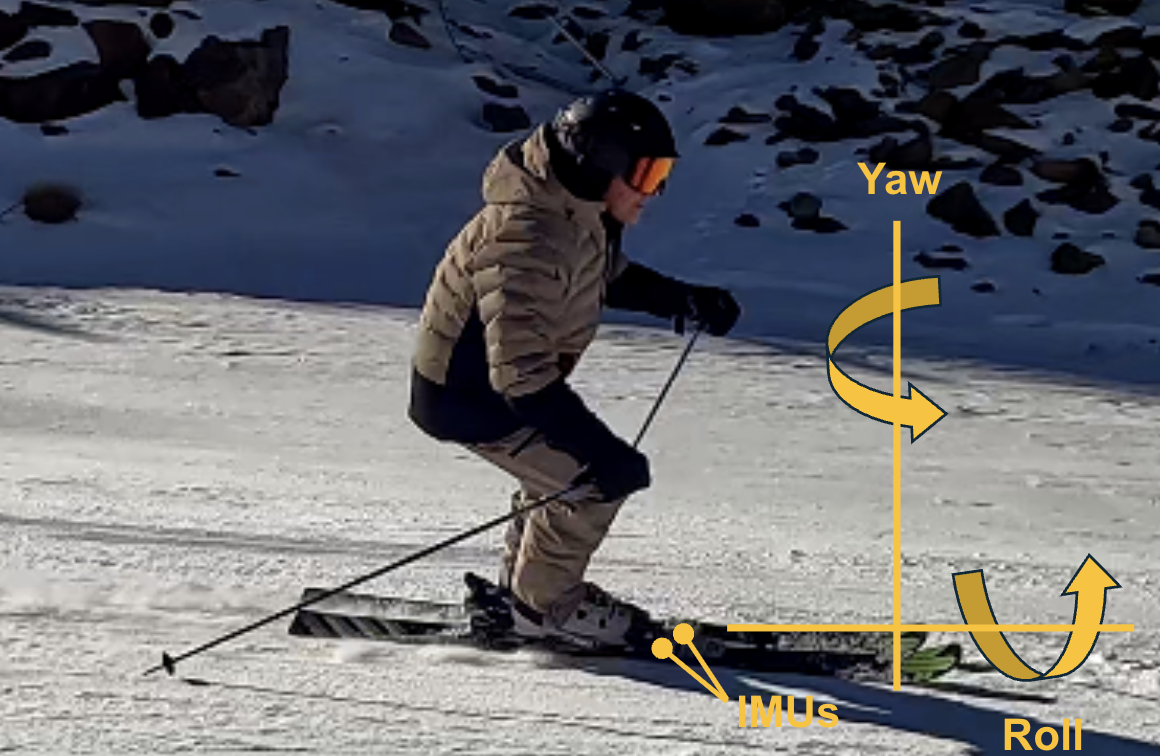
We use inertial measurement units (IMUs) to capture movement dynamics in real-world conditions. These sensors continuously record acceleration, angular velocity, and orientation in three-dimensional space, allowing a detailed understanding of how the athlete moves.
By combining these measurements, the system enables continuous tracking of motion, even in complex and dynamic environments such as outdoor sports.
ADVANCED ANALYSIS
Our research bridges the gap between complex sensory data and actionable insights for athletic performance

AI Implementation
Advanced machine learning models enable automatic recognition of movement patterns and sports techniques, providing precise and objective analysis.

PC Application
A dedicated software platform enables visualization, synchronization, and in-depth analysis of performance data for researchers and coaches.

Knowledge Transfer
Research outcomes are translated into practical insights and shared with athletes, coaches, and sports organizations to maximize real-world impact.
INERTIAL SENSOR-BASED SPORTS MONITORING SYSTEM
Monitoring movement is essential in Sports Science to optimize technique, improve performance, and reduce injury risk.
Our system is based on wearable inertial sensors that measure kinematic variables at high sampling rates, enabling precise analysis of fast and complex movements in real conditions.
Designed to work beyond laboratory environments, the system is adaptable to a wide range of sports, including athletics, running, jumping, climbing, and tennis, as well as winter sports such as alpine skiing, cross-country skiing, snowboarding, ski mountaineering, and biathlon.
This technology allows athletes and coaches to better understand movement patterns and make data-driven decisions to enhance performance..
The data collected from the inertial sensors placed on the skis is transmitted and synchronized with video recordings through a custom-developed Python application, which can be controlled from a mobile device as part of a fully connected system. The platform integrates multiple devices, including smartphones and wearables such as smartwatches, enabling real-time interaction and seamless data acquisition during training or testing.
This integration allows precise alignment between sensor data and real movement, enabling detailed analysis of motion through key variables such as orientation (yaw, pitch, and roll). It makes it possible to accurately identify each phase of the technique and build structured datasets of movement patterns, which are then used to train artificial intelligence models capable of recognizing techniques and analyzing performance in real conditions..