INTRODUCTION AND MOTIVATION
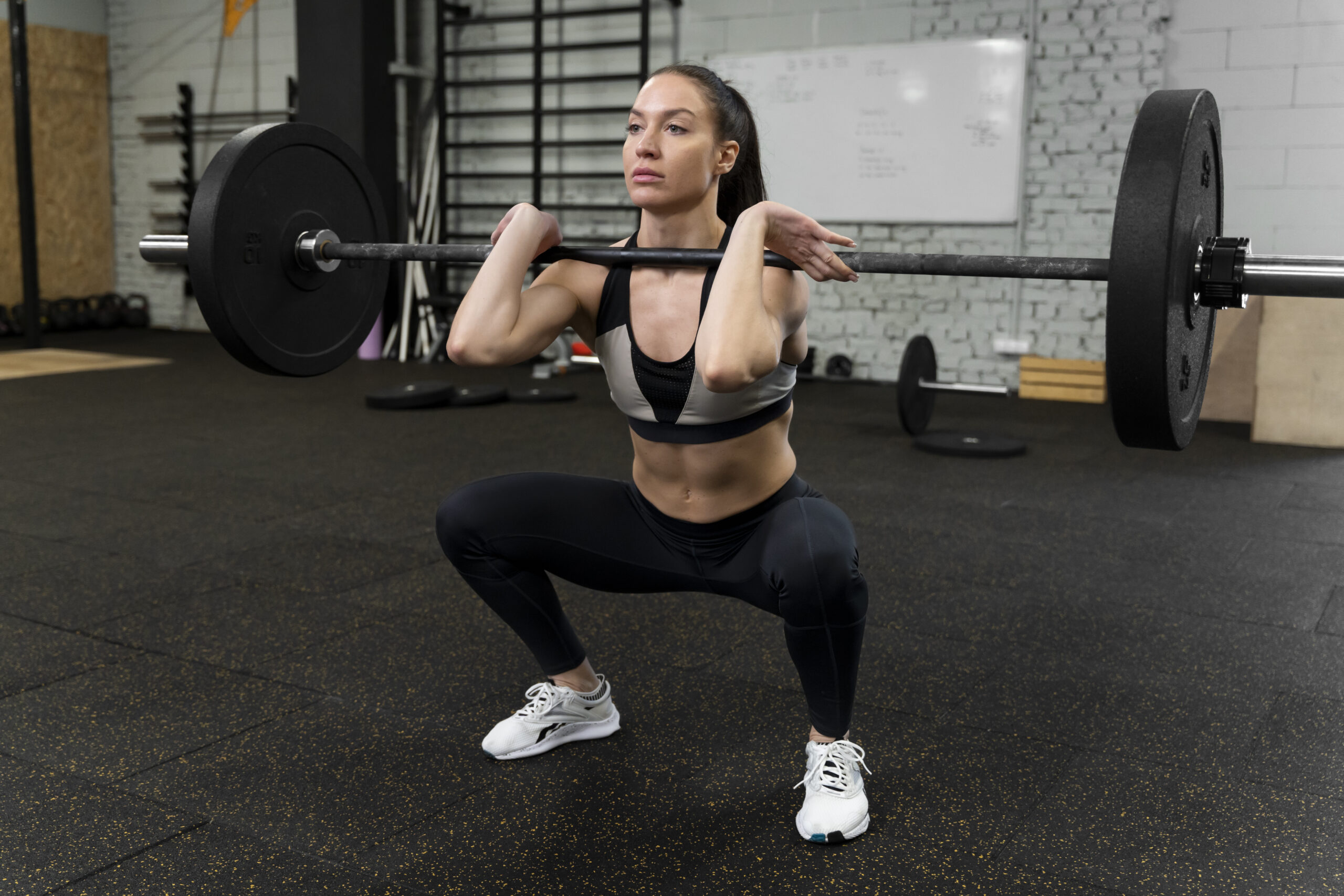
The use of wearable technologies in strength training enables the analysis of exercise execution and movement patterns during workouts.
Due to delays in hardware development, commercial inertial sensors were used to monitor strength training exercises, allowing the collection of movement data in real training environments.
DEVELOPED PROTOTYPE
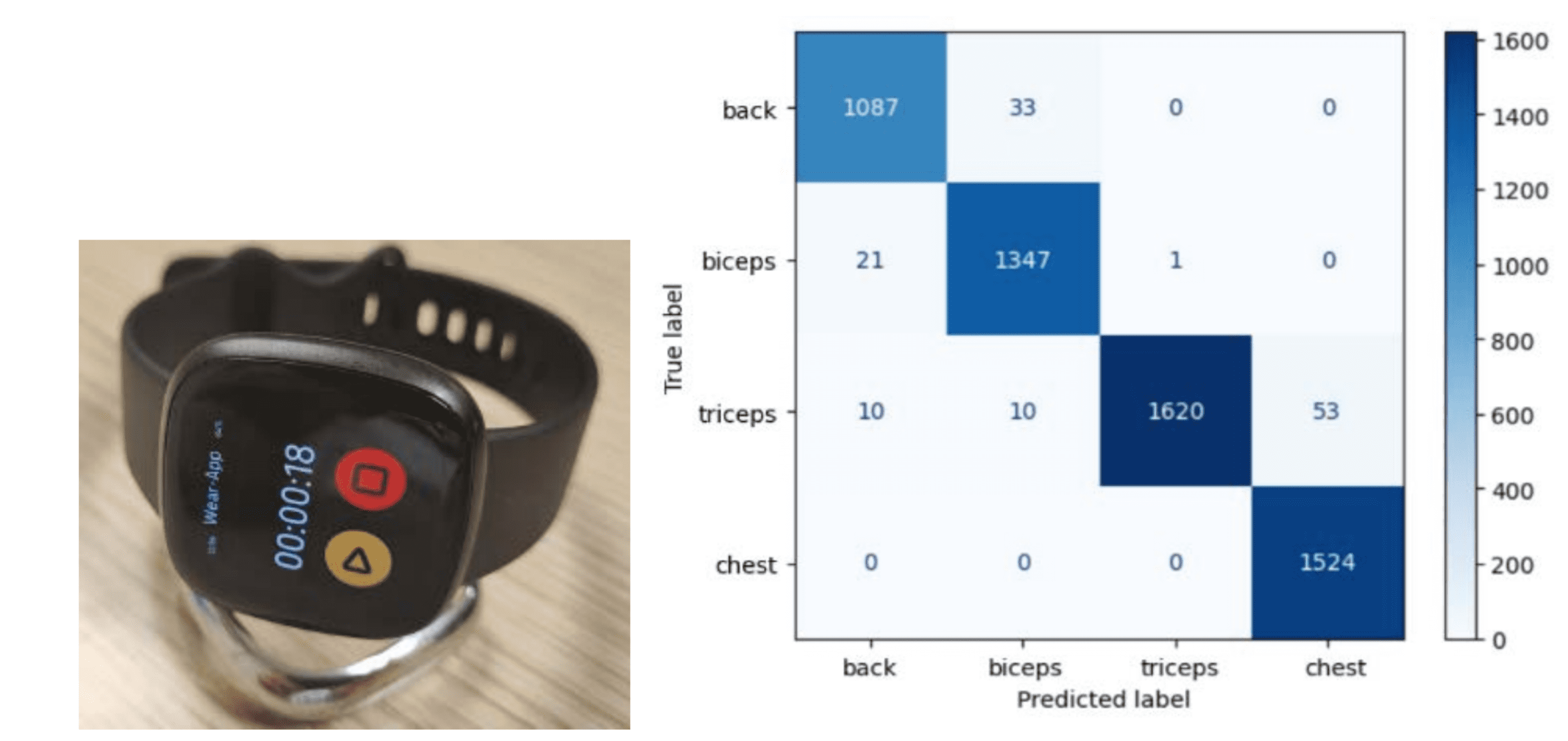
A smartwatch-based system was implemented using a Fitbit Versa 3, reprogrammed to access accelerometer data during exercise execution.
The system captures motion data during strength training and processes it using artificial intelligence techniques, enabling automatic recognition of different types of exercises without interfering with the athlete’s routine.
LOAD MEASUREMENT AND CALIBRATION
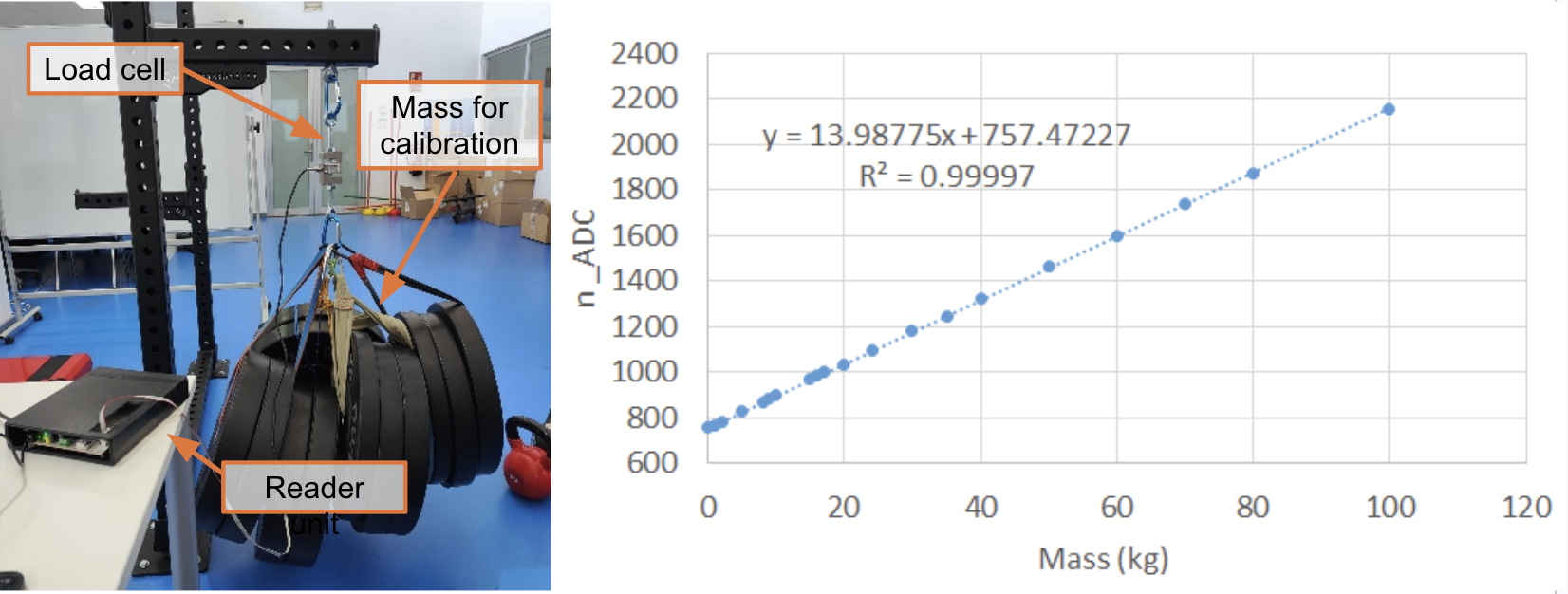
A load measurement system was implemented using a load cell connected to a reader unit, allowing accurate force monitoring during strength training. Calibration was performed using known masses, establishing a linear relationship between the applied load and the sensor output.
The results show a strong correlation between measured signal and applied mass (R² ≈ 0.999), confirming the reliability and accuracy of the system for load quantification in controlled conditions.
The results show a high level of agreement between devices, confirming the reliability of the proposed system for strength and performance assessment. This validation supports its use as a robust and accurate tool for movement analysis in training environments.
ISOMETRIC FORCE MEASUREMENT
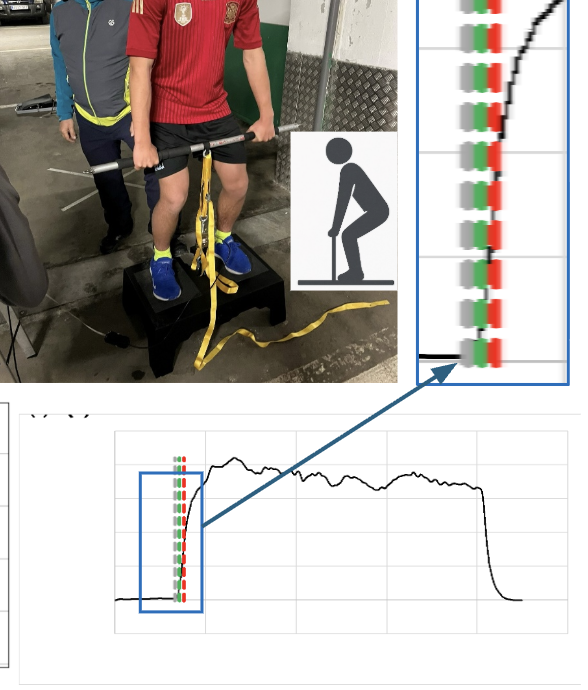
An isometric force measurement system based on a load cell was fully developed to accurately record force under controlled conditions.
As shown, the athlete performs a static pull while the system captures the force signal. The analysis focuses on the most stable region of the signal, allowing a reliable assessment of force output and measurement consistency.