INTRODUCTION AND MOTIVATION
Monitoring human movement such as running, jumping and walking is essential to assess physical performance, fatigue and neuromuscular response.
Jumps, in particular, are a key indicator of physical ability and fatigue. This work focuses on developing a portable and low-cost inertial system capable of accurately measuring movement and performance in real conditions.
The system is based on IMU technology, where data are collected and processed through a smartphone application for immediate analysis.
SPECIFIC OBJECTIVES
Our research focuses on analyzing human movement through inertial systems to improve performance, efficiency and reaction capacity.

Measure jump performance
Accurate measurement of flight time and jump height using a wearable IMU system, validated against gold-standard force platforms.

Develop a portable system
Design of a lightweight, low-cost inertial system connected to a smartphone app for real-time monitoring of running, jumping and walking.

Validate results
Validation of movement and reaction time measurements, ensuring reliable data for performance analysis and athlete monitoring.
MATERIAL AND METHODS
The study was carried out at the IMUDs facilities of the University of Granada using both a gold standard system and an inertial solution. The reference system was a Kistler 9260AA6 force platform, while the developed system was based on a 9DoF Razor IMU M0 with a 3-axis accelerometer. The technique analyzed in this study was the Counter Movement Jump (CMJ).
SYSTEM FEATURES
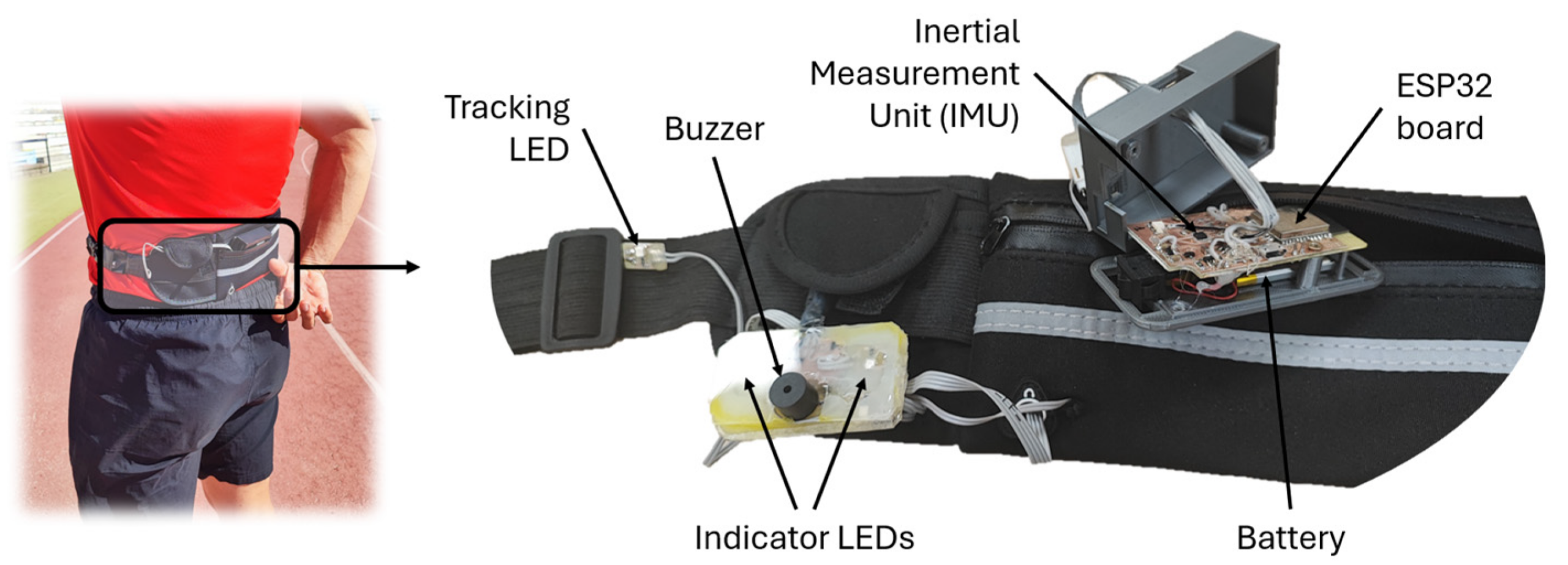
The system measures acceleration within a range of ±16 g at a sampling frequency of up to 200 Hz. It communicates via Bluetooth Low Energy and includes a battery with more than 3 hours of autonomy. Data can be stored on an integrated SD card, and the total device weight is 47 g. All data are processed and visualized in real time through a smartphone application.
MEASURING REACTION TIME
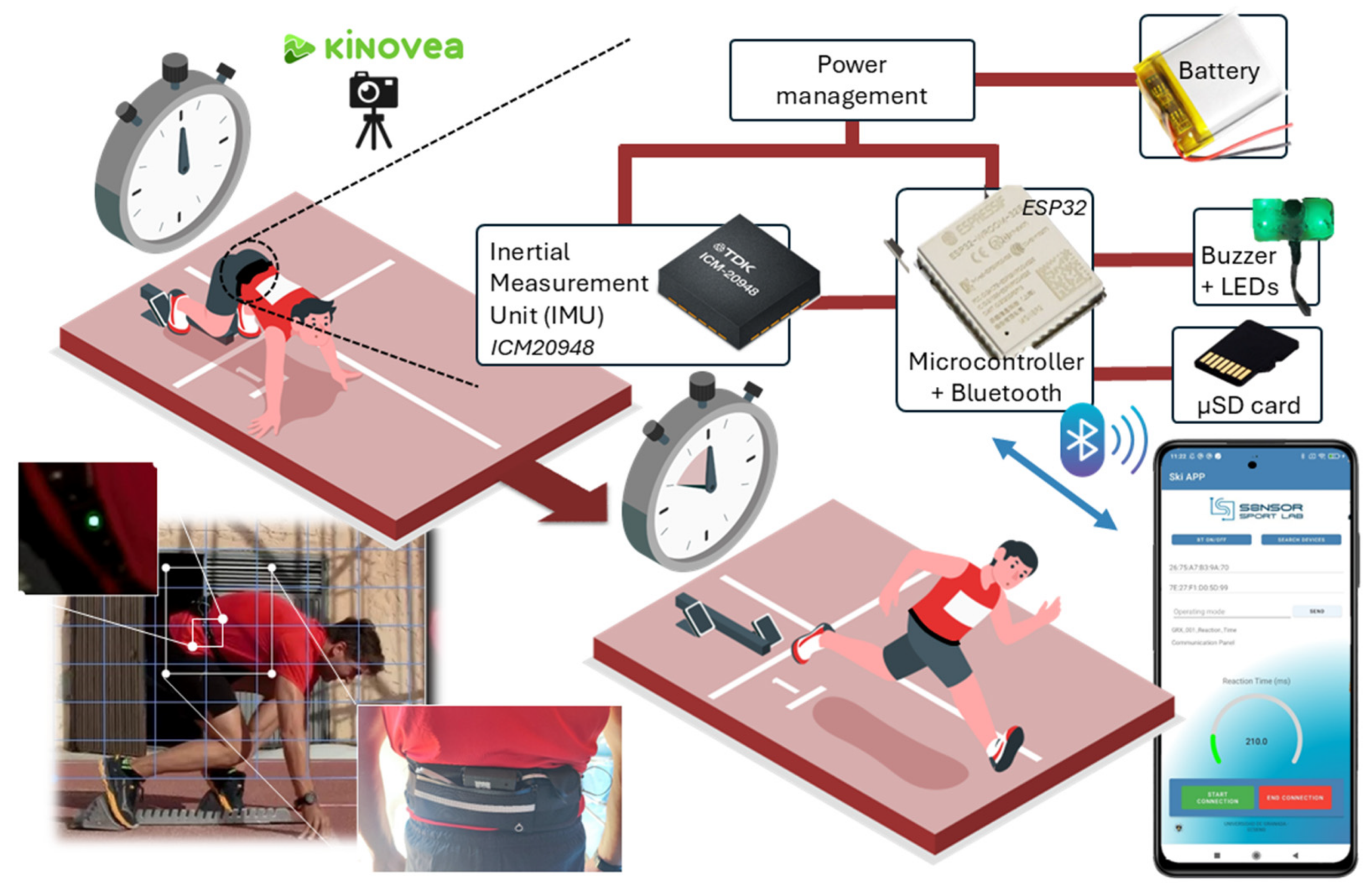
A reaction time measurement system has been developed using an IMU combined with an auditory stimulus. The device connects to a smartphone via Bluetooth, and after pressing the start button, a sound is emitted following a random delay.
The athlete’s response is detected through a sudden change in acceleration, allowing the system to calculate the reaction time as the interval between the stimulus and the movement onset. The result is instantly displayed on the smartphone, providing immediate feedback to the user.
REACTION TIME SYSTEM ARCHITECTURE
This system evaluates reaction time by combining inertial sensing with an acoustic trigger. After initiating the test, the device generates a stimulus at a randomized moment, while the IMU continuously records movement data.
The athlete’s response is identified through a rapid variation in acceleration, enabling accurate detection of movement onset. This allows precise computation of reaction time, which is automatically processed and visualized in real time on the smartphone, offering immediate performance feedback.
Discover more in the full article:
https://www.mdpi.com/1424-8220/25/21/6730
JUMP MONITORING SYSTEM ARCHITECTURE
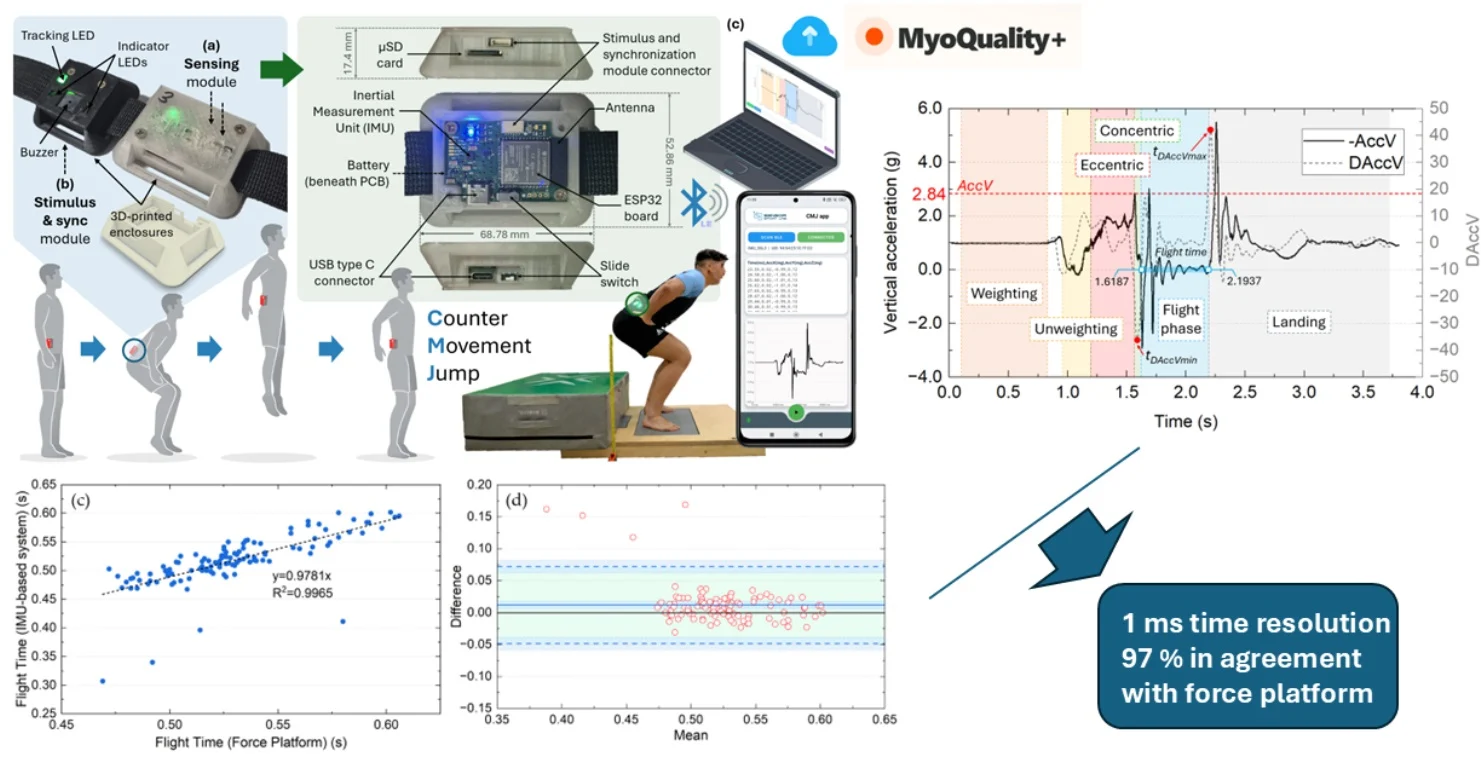
The system is composed of a sensing module placed on the athlete, a stimulus and synchronization unit, and a mobile application for data visualization and analysis.
The IMU continuously records acceleration data, while the synchronization module ensures accurate alignment between the stimulus and the detected movement. Data are transmitted via Bluetooth and processed in real time, allowing immediate access to performance metrics and facilitating further analysis through cloud-based platforms.
Discover more in the full article:
https://www.mdpi.com/1424-8220/26/5/1408
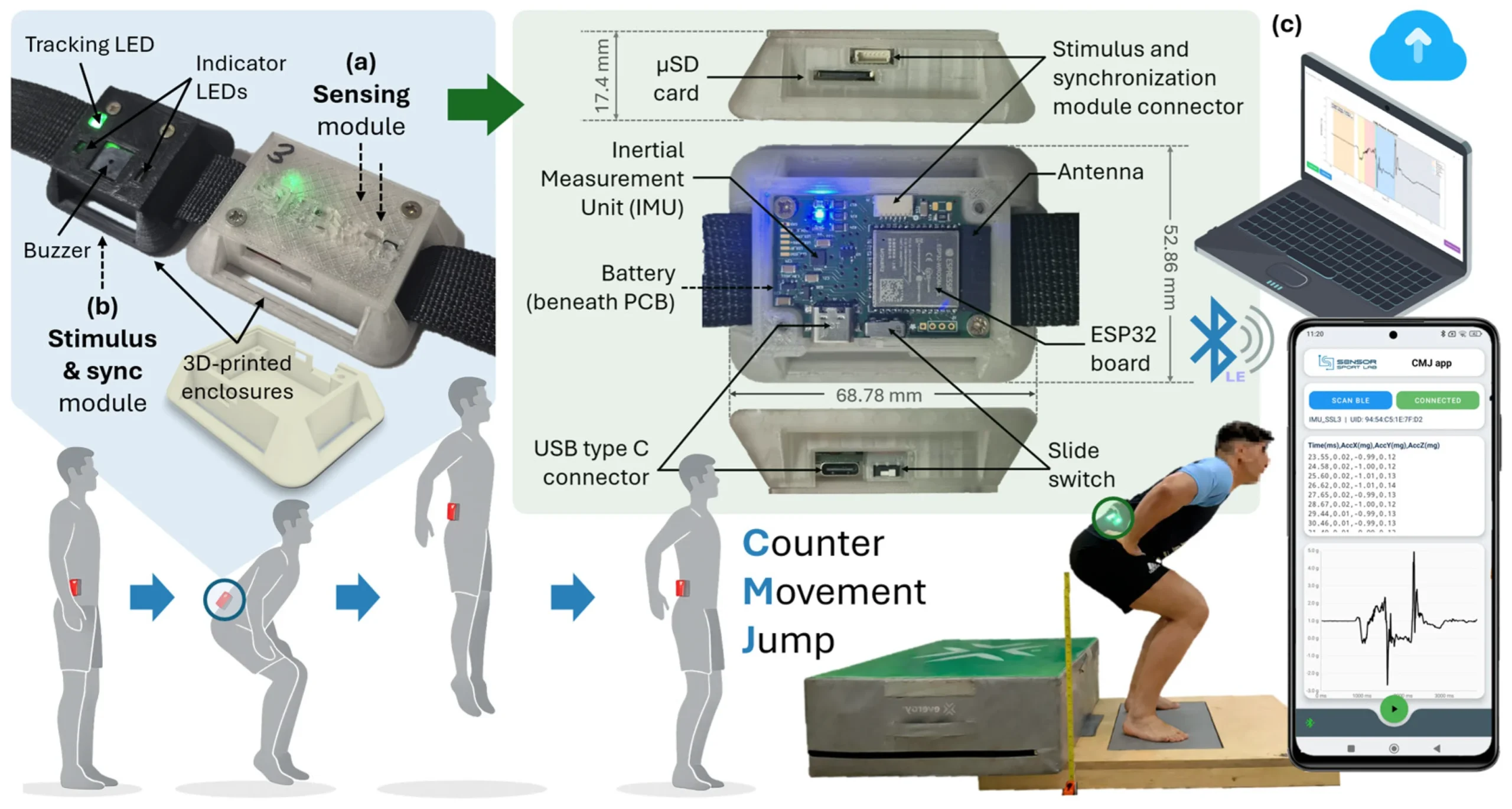
IMU-BASED CMJ ANALYSIS AND VALIDATION
This research focuses on the development of an IMU-based system for Counter Movement Jump (CMJ) analysis, enabling automatic detection of movement phases such as eccentric, concentric, flight and landing. The system integrates inertial sensing with data processing through a smartphone application, enabling quantitative assessment of jump performance.
Validation against a force platform demonstrates a high level of agreement, achieving up to 97% accuracy and a time resolution of 1 ms, confirming the reliability of the proposed approach for precise performance assessment.